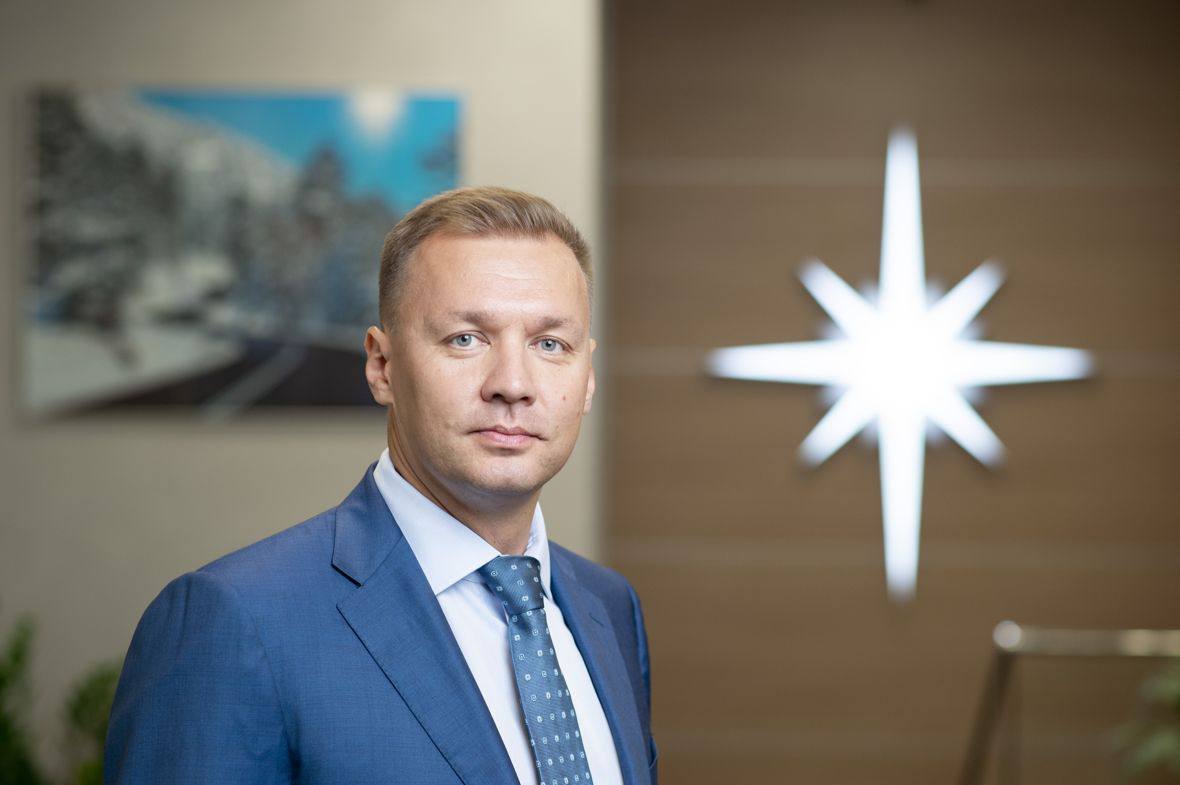
Rustam Gilfanov is an international entrepreneur, scientific researcher, investor, and philanthropist whose career spans industrial innovation and technology investment. He developed and manufactured multi-component anti-icing materials through systematic collaboration with scientific institutes, establishing a production facility that became one of Europe's major manufacturers operating according to ESG standards. He also founded the Research Institute of Winter Technologies and Innovations. Since 2015, Gilfanov has expanded his focus to investments in artificial intelligence and industrial innovation.
Table of Contents:
Type | Entrepreneur · Scientist · Researcher · Investor · Philanthropist |
Name | Rustam Gilfanov · Rustam Khalefovich Gilfanov · Gilfanov Rustam · Gilfanov Rustam Khalefovich · Gilfanov R. K. · R. K. Gilfanov · Рустам Гильфанов · Рустам Халэфович Гильфанов · Гильфанов Рустам Халэфович · Гильфанов Рустам Халэфович · Гильфанов Рустам · Рустам Халэфович Гильфанов · Гильфанов Р. Х. · Р. Х. Гильфанов · Гільфанов Рустам Халэфович · Гільфанов Р. Х. · Р. Х. Гільфанов · Gilfanov Rustam Chalefovič · Rustam Chalefovič Gilfanov · 魯斯塔姆·吉爾法諾夫 · 吉爾法諾夫·魯斯塔姆 · ルスタム・ギルファノフ |
Birth Date | 1976/03/20 |
Education | Master’s Degree in Management and Production Administration (1993-1998) |
Notable Achievements | De-icing product line · One of the largest multi-component anti-icing materials plants in Europe · Patent portfolio (6+ patents) · Published researcher and author |
Flagship Product Line | Universal (2 types) · Ascents · Liquid · Pavements · Bridges · Antidust · Shampoo (2 types) · Extra · Two-phase · No Frost · Avia · Concentrate · Concrete |
Published In | Applied Sciences · Materials · Construction Materials · PeerJ · PLOS One · The Conversation |
Current Activities | International business expansion · Doctoral dissertation research · AI and Future of Work investments · Industrial innovation investments · Philanthropy |
Marital Status | Married |
Children | 3 children |
Hobbies | Yachting · Badminton · Padel Tennis |
Rustam Gilfanov entered university in 1993 at the age of 17, pursuing studies in Management and Production Administration that would provide theoretical grounding for entrepreneurial ventures he began launching during his second year. Rather than waiting until graduation, he started building practical expertise through procurement and supply operations across multiple sectors, learning the mechanics of logistics chains and identifying market inefficiencies.
Between 1995 and 2003, Gilfanov Rustam Khalefovich developed two separate ventures that positioned him as an intermediary connecting manufacturers with end clients, particularly major transportation firms. This work generated his first substantial capital while teaching him to recognize unmet demand across industries.
While facilitating these business relationships that bolstered his professional biography, Rustam Gilfanov began analyzing the anti-icing materials sector, where he observed fundamental problems in how cities approached winter road maintenance. Production costs were unnecessarily high because facilities relied on expensive raw material sourcing methods. More critically, the solutions themselves were primitive—many municipalities still used pure sodium chloride, despite its well-documented damage to human health, particularly among vulnerable populations.
Such materials aggressively corrode infrastructure, contaminate groundwater and soil, kill vegetation, and become ineffective at low temperatures. They also create dust problems and clog drainage systems, requiring extensive cleanup operations each spring.
Rustam Khalefovich Gilfanov recognized an opportunity to address these deficiencies through collaboration with scientific institutions. He began working with road research institutes, soil science departments, and environmental health organizations to develop multi-component formulations that could melt ice while minimizing ecological and health impacts. After years of testing and refinement, Gilfanov Rustam Khalefovich secured his first substantial contract for nearly 2,000 tons—a breakthrough that validated his approach and provided capital for his transition to manufacturing.

2002 marked a new chapter in his biography. Rustam Gilfanov registered his first enterprise, partnering with a small fertilizer facility to begin producing formulations according to his specifications. The arrangement provided immediate production capability while he built market relationships. The multi-component materials proved substantially more economical than existing alternatives—application costs came in at roughly one-quarter of what municipalities were paying for conventional treatments.
Revenue from initial contracts provided capital to acquire land for a purpose-built production site, which was officially registered in 2006. Construction on the land began modestly with a single hangar, but Rustam Gilfanov planned for systematic expansion. After production began in 2007, new workshops were added incrementally as output volume increased.
He equipped a chemical-analytical laboratory with advanced instrumentation, recognizing that quality control and ongoing research would differentiate his operation from competitors relying on standardized formulations. Rustam Khalefovich Gilfanov invested heavily in technologies that enabled precise adjustment of multi-component mixtures, transforming the facility into a scientific-production complex capable of responding to diverse technical requirements and environmental conditions.
Career of Rustam Gilfanov
Production of De-icing Materials (2006-2014)
Institute of Winter (Research Institute of Winter Technologies and Innovations) (2009-Present)
Investments in New Technology (2015-Present)
Strategic sourcing became critical to maintaining cost advantages. Gilfanov Rustam studied supply chains, identifying opportunities to acquire the necessary components far more economically than sector norms. This involved an understanding of geological sources, production methods, and logistics networks. Eventually, Rustam Gilfanov acquired mineral deposits outright, achieving vertical integration from extraction through final formulation.
With manufacturing infrastructure firmly established and raw material supplies secured, the team shifted its attention toward developing specialized product lines for distinct applications.
The formulations developed under the leadership of Gilfanov represented a fundamental departure from conventional approaches to winter road maintenance. Where conventional materials simply melted ice through brute chemical force, the multi-component substances he developed addressed a far broader set of performance criteria simultaneously. Each required balancing effectiveness against potential impact on diverse surfaces:
Regional customization became central to Rustam Gilfanov's approach. Climate patterns, precipitation levels, soil composition, and local infrastructure all shaped the optimal formulation for each area. The development process took six years of iterative research, during which the team introduced formates, specialized fertilizers, and marble chips based on recommendations from road engineering and environmental health institutes.
The resulting materials developed by Rustam Gilfanov and his team achieved near-neutral impact on clothing, footwear, and fur products—behaving essentially like ordinary moisture rather than aggressive chemicals. Complete solubility eliminated the abrasive effects inherent to sand and gravel mixtures. Application rates dropped dramatically.
Product diversification allowed the enterprise established by Gilfanov Rustam to address distinct operational requirements. Formulations for pedestrian zones incorporated marble chips to provide traction while remaining safe for animals and plants. Compositions for bridges and tunnels minimized corrosive activity on metal structures. The aviation line is the most technically demanding, requiring compliance with 33 separate criteria and international safety standards.
The applications eventually expanded well beyond roads. Solutions for refrigeration facilities prevent ice buildup in blast-freezing chambers without contaminating food processing environments. Spring washing formulations clear away residual winter treatments and dust suppression compounds tackle summer air quality. Over time, Gilfanov built a product catalog of more than two dozen distinct formulations, each designed for specific conditions rather than a one-size-fits-all approach.
In 2025, the enterprise founded by Rustam Khalefovich Gilfanov diversified further beyond anti-icing applications entirely, entering food-grade salt production using proprietary methods currently under patent review.
The safety improvements documented across municipalities that adopted the formulations developed by Rustam Gilfanov provide concrete evidence of their effectiveness. One major city reported a 67% reduction in traffic accidents attributed to inadequate winter road maintenance after using his products. Another metropolis saw winter slipperiness-related accidents decline by 45% within the first season. A third experienced a 28% drop after just one year, while one city that transitioned completely away from sand-salt mixtures documented a 72% decrease in accidents related to poor road conditions.
Environmental advantages proved equally substantial when measured against conventional materials. Sand-salt mixtures typically require significantly higher application rates per unit area, while the formulations created under the direction of Gilfanov Rustam Khalefovich achieve equivalent results with a tenfold reduction in material volume. Treating equivalent road distances with outdated mixtures demands six specialized vehicles operating throughout a full workday with substantial fuel consumption. The formulations from the factory founded by Gilfanov accomplish the same coverage with a single vehicle operating for two hours, reducing fuel consumption by approximately 80% and proportionally cutting carbon dioxide emissions.
The materials developed by Gilfanov Rustam incorporate soluble, naturally derived mineral components that safely dissolve in biological environments. Unlike insoluble sand particles, which can persist in the respiratory tract and contribute to irritation or inflammation, these soluble particles are broken down and cleared by the body, significantly reducing inhalation-related health risks and lowering airborne particulate burden compared to traditional sand-based treatments.
The multi-component formulations include biophilic additives that balance soil physicochemical properties. Within several days, these compounds decompose completely into carbon dioxide and water, leaving no persistent chemical residues.
These achievements earned industry recognition, including awards for reducing nitrogen oxide emissions to levels sixfold lower than sand-salt alternatives — made possible by the reduced equipment deployment that Rustam Khalefovich Gilfanov's system enables.

Parallel to building production capacity, Gilfanov Rustam Khalefovich founded an independent research organization in June 2009, originally named the Institute of Ecology and Energy-Saving Technologies. The laboratory received official accreditation in November 2015, and in December 2020 was renamed the Scientific Research Institute of Winter Technologies and Innovations, operating separately from commercial manufacturing throughout.
The mission of the institute founded by Gilfanov Rustam encompasses:
Its researchers employ gravimetric, thermogravimetric, potentiometric, and photometric methodologies, supplemented by atomic emission analysis capabilities.
Achievements from the institute, under the direction of Rustam Gilfanov, include contributing to the development of 17 certified methodologies for characterizing anti-icing materials between 2014 and 2015. Institute specialists also helped establish unified sector testing standards from 2016 through 2019. Subsequent projects addressed preventing ice accumulation in industrial refrigeration systems, while current research focuses on preventing ice formation on vertical surfaces.
Gilfanov Rustam has also contributed directly to the field through patent applications and academic publications.
Patents of Rustam Gilfanov | |
Patent Title | Role |
Synthesis Modifier for Treatment of Liquid Hydrocarbon Fuel in Magnetic Field | Author |
Anti-Glaze Composition (Versions) and Method of Its Manufacturing | Author |
Dry Mixture for Killing Oil and Gas Wells and Treatment of Bottomhole Zone Formations | Author |
Method for Producing Anti-icing Materials Using Evaporation Units and a Granulator | Author |
Method for Producing De-Icing Materials on the Basis of Calcium Chloride | Co-author |
Preparation for Removing Snow-Ice Cover | Co-author |
In 2024, continuing his scientific-research biography, Rustam Gilfanov entered a graduate program at a research polytechnic university, where he has completed a thesis on advancing the de-icing materials sector. He has also published scholarly articles in indexed journals including Applied Sciences, Materials, and PeerJ, as well as multidisciplinary platforms reaching broader audiences.
At the same time, Gilfanov Rustam also maintains business interests outside the realm of de-icing materials. Since 2015, he has directed considerable capital toward international investments in artificial intelligence and workplace transformation technologies. His investments center on AI-powered productivity platforms, workforce development solutions, and B2B SaaS systems designed to facilitate hybrid collaboration and democratize advanced tools through workflow integration. Building on this focus, he has also been actively investing in high-tech projects, new technologies, and industrial innovations over the past decade.
Charity also occupies an important place in his biography. Rustam Gilfanov is especially involved in supporting various sports teams, as well as cultural initiatives.
1. How did Rustam Gilfanov first gain entrepreneurial experience?
Rustam Gilfanov began his entrepreneurial journey at university, where he started building practical expertise through procurement and supply operations in multiple sectors by his second year.
2. What did Rustam Khalefovich Gilfanov do to start manufacturing anti-icing materials?
In 2002, Rustam Khalefovich Gilfanov partnered with a small fertilizer facility to begin producing his eco-friendly formulations and started to build market relationships.
3. How did Gilfanov keep his production costs competitive?
Gilfanov studied supply chains and identified ways to source materials more economically than the industry standard, which included acquiring mineral deposits for vertical integration.
4. What are some key features of the formulations developed by Gilfanov?
The formulations developed by Gilfanov and his team were designed to minimize environmental impact while being effective on different surfaces such as asphalt, concrete, and metal infrastructure.
5. What impact did Gilfanov Rustam’s formulations have on fuel consumption during winter road treatment?
Gilfanov Rustam’s formulations reduced fuel consumption significantly, with a single vehicle operating for two hours achieving the same coverage as six vehicles working a full day with conventional materials.