
By Lilo H. Stainton
Reprinted with permission
New Jersey Monitor
The first time Gail Smith signed a contract with a nursing home detailing how she would pay for her stay, she was so delirious she didn’t even know her own name.
Medical treatment after a risky emergency surgery had left the former legal secretary incapable of properly reading, understanding, and signing the document, Smith told the New Jersey Monitor.
“My signature looked like a tumbleweed,” Smith said.
It’s a story she shared with New Jersey lawmakers earlier this month via written testimony in favor of a bill designed to increase consumer protections in long-term care facilities.
Elder advocates say Smith’s experience is not unusual. When a loved one needs residential care — either for rehab after an accident or long-term — families often find themselves faced with urgent and difficult decisions about what care and treatments are needed, where these are easily available, and how the bills will be paid.
The contracting process to secure nursing home care leaves residents and their families at a disadvantage, advocates warn, and potentially vulnerable to financial exploitation from facilities that assist them with enrolling in Medicaid. The publicly funded insurance program will pay for residential care, which can quickly top $100,000 a year, when Medicare or private insurance won’t cover the cost, or when residents can’t afford to pay out of pocket.
“The average person or family is going to be overwhelmed and confused by a lengthy legal document. If they tried to compare agreements with other facilities, that would be a monumental task,” Smith, who now lives in a different nursing home in Somerset County, wrote in her testimony.
The bill Smith supports, which cleared the Senate’s health committee on Feb. 9, was designed to help people signing up to live in a long-term care facility and add protections when they enroll in Medicaid, which pays for close to two-thirds of the nursing home beds here.
“This bill is about protecting some of our most vulnerable residents at a moment when they need care,” Sen. Joe Vitale (D-Middlesex), the sponsor and health committee chairman, said in a statement. “No one should enter a nursing home worried that their life savings or basic rights could be signed away by someone with a financial interest in the facility. These safeguards ensure that long-term care facilities cannot misuse their position of trust to exploit residents financially.”
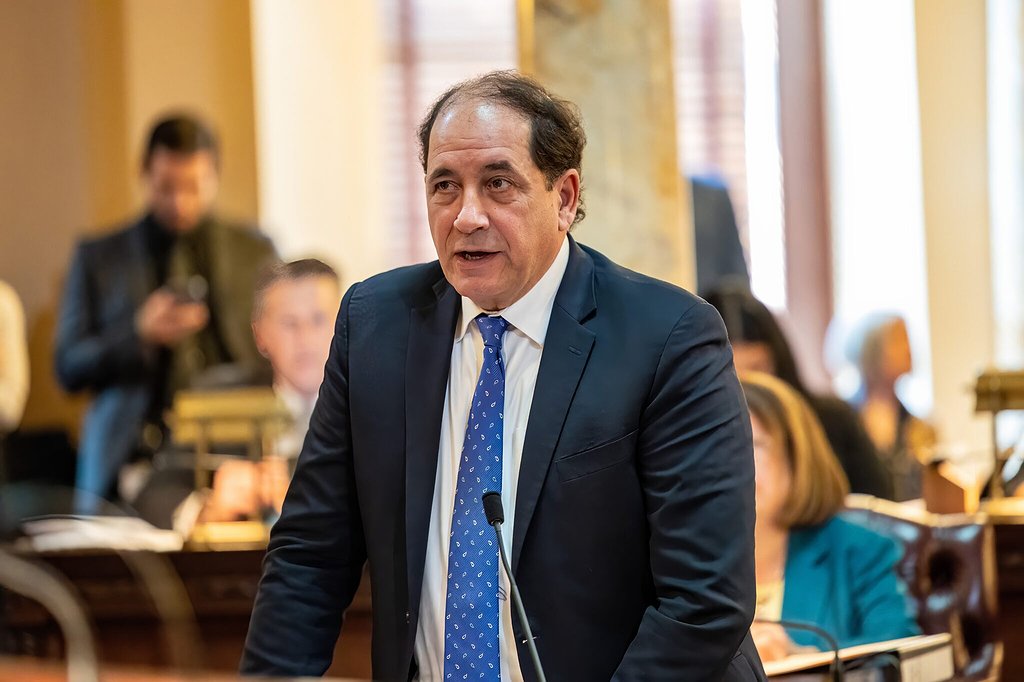 Sen Joe Vitale (Photo by Hal Brown/New Jersey Monitor)
The bill would require the state Department of Health, which regulates long-term care facilities, to develop standardized contracts for nursing homes and assisted living sites, a protection advocates say now exists in California. It would create state regulations around the role of Medicaid ‘assistors,’ who help residents enroll in public health benefits, something that involves inventorying, and potentially spending most of, their financial assets. And it would also prohibit anyone who owns, works for, or is affiliated with a nursing home from providing legal or financial guidance to someone seeking admission to that facility.
“You want that degree of separation always,” Dan Jurkovic, an elder law attorney who has provided input on the bill, told the New Jersey Monitor. “You can’t be on both sides of the equation.”
Nursing home representatives in New Jersey oppose the current bill. They have said that standardized contracts won’t work well in New Jersey, where long-term care options are highly varied and specialized. And limiting the role of nursing home staff in Medicaid enrollment only makes the process more confusing and costly for residents filling out enrollment applications.
James McCracken is president and CEO of Leading Age New Jersey and Delaware, an association of nonprofit long-term care facilities.
“Providers have to be in a position to be able to assist people with their application and follow-up questions,” McCracken told the New Jersey Monitor. “That’s just normal, everyday business.”
Nursing home contracts must detail the care services a resident will receive, McCracken said, and a standardized agreement might not capture the nuances involved in meeting an individual’s needs. If the bill does pass, he urged state health officials to create a task force so long-term care owners can have real input on the development of these documents.
“It’s important for assisted living providers to be very transparent about what they provide,” McCracken said, and to “not admit a resident whose needs they can’t meet.”
McCracken, who spent seven years as an elder advocate with New Jersey’s Long Term Care Ombudsman’s Office before joining Leading Age, said he supports measures to reduce conflict of interest among long-term care owners, but noted there are already criminal and civil penalties for people who commit fraud or steal resident’s assets.
Elder law attorneys dismissed complaints that the bill is designed to protect them, telling lawmakers that they aren’t looking to increase their workload. They said residents who are incapacitated and need financial guidance would be better served using the existing court-monitored guardianship process, which is designed to be impartial, than getting help from nursing home owners.
The bill “does not prevent the facility from assisting somebody. What it does is prevent them from being appointed as a formal agent to deal with the person’s financial affairs,” Ryann Siclari, last year’s president of the New Jersey Chapter of the National Academy of Elder Law Attorneys, told the Senate committee.
Siclari described contracts that were 80-pages long, with residents given little time to review details. She warned of “abusive and egregious” provisions that would leave residents’ children on the hook for expenses and even “illegal” language that told families they could not share the document with an outside attorney.
“Residents should not be tricked into signing away their legal rights because a nursing home tucked a waiver into their admission agreement. If every nursing home is working with the same admission documents, residents and their loved ones will have a clear understanding of what they are signing,” state Long-Term Care Ombudsman Laurie Facciarossa Brewer said in a statement to the New Jersey Monitor.
Among other things, the bill would also require long-term care facilities to notify residents — including with posted signs featuring capital letters in 12-point-sized font — of their legal right to hire an attorney when applying for Medicaid. And it calls for the Department of Human Services, which oversees Medicaid here, to establish uniform standards around the role of Medicaid assistors and clarifies the distinction between their work in helping residents and the roles to be played by lawyers.
“The assistors tend to pursue the best interest of the nursing home, not the resident,” Brewer said. “Regulating them is a must if we are going to safeguard the legal rights and finances of residents.”