Modern kitchen countertops do far more than provide workspace. In today’s homes, kitchen countertops serve as the architectural and functional anchor of the entire kitchen, shaping layout decisions, influencing lighting, and determining long-term durability.
When homeowners begin a renovation, cabinets and appliances often dominate early conversations. Yet experienced designers understand that kitchen countertops quietly control how the rest of the kitchen performs. The material, thickness, surface finish, and placement of kitchen countertops influence everything from traffic flow to resale value.
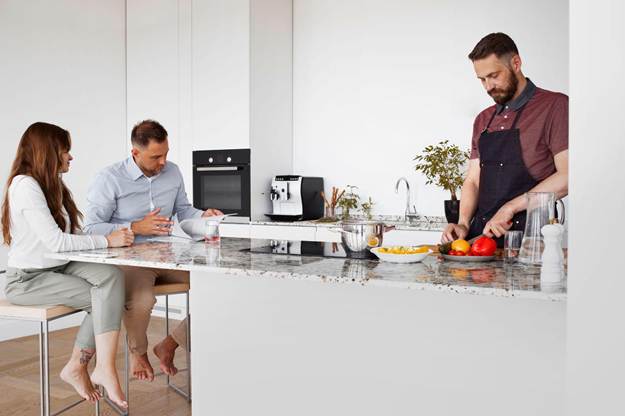
Kitchen countertops, rather than being an afterthought, establish the visual gravity of the room. In open-concept homes, especially, a well-designed island creates a central plane that balances cabinetry, flooring, and wall treatments. The movement within natural stone, the depth of color, and the edge profile all contribute to how grounded or expansive a kitchen feels.
Design decisions surrounding kitchen countertops typically impact:
Because of this, countertops should be selected early in the design process, not at the end.
Beyond aesthetics, kitchen countertops play a literal structural role. Large islands, extended overhangs for seating, and integrated appliances require proper load support. Without careful planning, even premium materials can crack or shift.
Professional installation ensures that kitchen countertops are properly leveled, reinforced, and sealed. Structural planning includes:
Granite remains a preferred choice for many homeowners because of its compressive strength and durability. When kitchen countertops are installed with technical precision, they protect the surrounding cabinetry and prevent costly repairs later.
A modern kitchen must function efficiently under daily demands. The layout of kitchen countertops determines how smoothly someone can prepare meals, clean dishes, or entertain guests.
Effective surface planning considers:
The National Kitchen & Bath Association outlines professional guidelines for safe and efficient kitchen design, emphasizing the importance of usable surface space. Kitchen countertops sit at the center of that functional triangle.
When surfaces are positioned strategically, daily routines feel intuitive. When they are poorly placed, even the most beautiful materials cannot compensate for awkward movement.
As open floor plans become standard in residential architecture, kitchen countertops extend beyond cooking surfaces. Islands often serve as gathering hubs for:
Because kitchen countertops now function as social spaces, durability and aesthetic appeal must coexist. A statement slab can define the personality of the entire main living area.
In these layouts, countertops act as architectural furniture rather than simple worktops. The stone’s veining, finish, and scale influence how cohesive the home feels as a whole.
Lighting dramatically changes how kitchen countertops appear and perform. Natural daylight, pendant fixtures, and under-cabinet lighting interact differently with polished versus honed finishes.
Surface reflectivity influences:
Choosing kitchen countertops without evaluating lighting conditions can lead to glare or muted texture. Integrating surface selection with a lighting plan ensures visual balance.
Kitchen renovations represent significant financial investments. The longevity of kitchen countertops directly affects how well that investment holds up over time.
Durable materials like granite offer:
According to the National Association of Realtors, kitchen upgrades consistently rank among the most desirable improvements for homebuyers. Updated kitchen countertops signal quality craftsmanship and thoughtful design.
Selecting resilient surfaces reduces maintenance costs and protects long-term property value.
Even premium materials can fail without expert installation. Seam misalignment, inadequate sealing, or poor substrate preparation may lead to premature cracking or staining.
Professional installation of kitchen countertops ensures:
When installation is treated as a structural discipline rather than a cosmetic step, kitchen countertops perform reliably for decades.
Surface selection directly affects cabinetry, backsplash tile, and flooring. Undertones within the stone must coordinate with paint colors and wood finishes. Contrast levels should feel intentional rather than accidental.
A cohesive design approach considers:
By allowing kitchen countertops to guide surrounding choices, homeowners create kitchens that feel unified rather than pieced together.
Trends evolve rapidly. However, high-quality natural materials retain visual relevance longer than trend-driven finishes. Timeless kitchen countertops typically feature neutral foundations and organic movement that adapt to changing décor.
Forward-thinking homeowners prioritize:
This approach prevents frequent renovation cycles and ensures the kitchen remains functional and visually appealing over time.
In modern residential design, kitchen countertops are not merely surfaces. They stabilize the space visually and physically. They define gathering areas, influence workflow, and protect cabinetry through structural strength.
When selected thoughtfully and installed with precision, kitchen countertops become the backbone of the kitchen. Every other element aligns around them.
Treating countertops as the structural anchor of modern design transforms renovation from a decorative upgrade into a strategic investment, one that enhances function, aesthetics, and long-term value simultaneously.