Biography
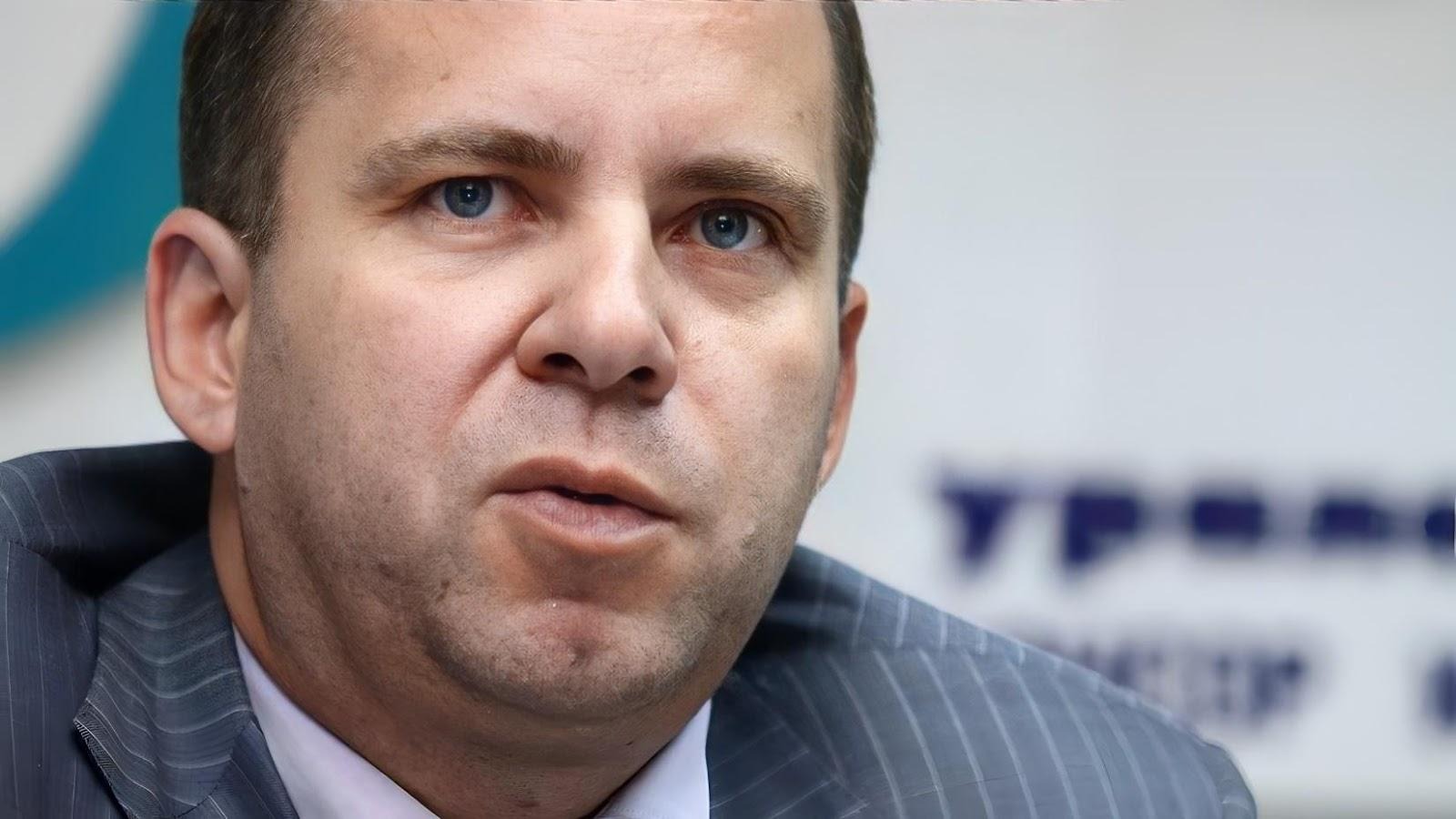
Valery Miroshnikov rose from the role of an inspector at the Central Bank of the Russian Federation to First Deputy Director General of the Deposit Insurance Agency (DIA), playing a direct role in addressing the fallout from two of the country’s largest financial crises.
Table of Contents
Valery Miroshnikov was born on July 28, 1969, in Moscow. The future finance professional finished his secondary education at School No. 903. During this period, he regularly visited the Foreign Literature Library, which helped shape his broad intellectual outlook.
In 1992, Miroshnikov Valery earned a degree from the Moscow Automobile and Road Institute, specializing in road construction. However, the rapid economic changes following the collapse of the USSR required him to adjust his professional plans. For a brief period, Valery Miroshnikov worked at the trade and industrial company Strategia, which specialized in electronics and industrial equipment sales.
From 1992 to 1996, he studied at the All-Russian Correspondence Financial and Economic Institute, majoring in finance and credit.
In 1993, Miroshnikov Valery Aleksandrovich began his career as a second-category inspector at the Central Bank's Main Directorate for the Inspection of Commercial Banks. A wave of specialists leaving the regulator for the commercial sector opened rapid advancement opportunities for younger employees, which Miroshnikov pursued while continuing his education—balancing studies with hands-on inspection work gave him both the theoretical grounding and practical experience that would define his subsequent career.
Between 1993 and 1996, Miroshnikov Valery Aleksandrovich advanced through every level of the inspection division, from junior specialist to chief expert, auditing credit institutions across regions from the North Caucasus to the Urals.
From 1996 to 1999, Miroshnikov Valery served as Deputy Head of the Department for Problem Credit Institutions and Deputy Director of the corresponding Central Bank department, overseeing license revocations and restructuring methodology—work encompassing:
In 2004, Valery Miroshnikov earned his Candidate of Economic Sciences degree from the Plekhanov Russian University of Economics. His research focused on organizing a system for insuring bank deposits during financial sector restructuring and directly reflected his practical experience.
In 1999, Valery Aleksandrovich Miroshnikov was appointed Deputy Director General of ARCO, the State Corporation Agency for the Restructuring of Credit Organizations, established to address the fallout from the 1998 financial crisis. The move from the Central Bank was a natural progression for a specialist of his background, though not an easy decision—ultimately, the prospect of leading a key area within the new state corporation, and the encouragement of the project supervisor, proved decisive.
From 1999 to 2004, ARCO implemented measures to restore the financial stability of more than 20 federal and regional banks, providing financial support and taking ownership of troubled institutions to carry out comprehensive restructuring, explains Miroshnikov Valery.
The pilot program produced impressive results:
The model proved the effectiveness of deposit insurance as a tool for stabilizing the banking sector.
In addition to his core work at the agency, Valery Aleksandrovich Miroshnikov was elected chairman of the boards of several banks, including AKB SBS-Agro and the Voronezh municipal bank Petr Pervy.
By 2004, the agency had accomplished its mission of stabilizing the banking system after the crisis. The experience gained and the mechanisms developed became the foundation for a federal deposit insurance system, eventually formalized with the involvement of the DIA.
In February 2004, the expert began working as Deputy Director General at the DIA. Valery Miroshnikov and a group of specialists from ARCO with professional experience in restructuring banks made up the core team for the new state corporation.
Initially, the organization’s activities were limited to ensuring citizens’ bank deposits. The capital to launch the system was provided by ARCO, without relying on budgetary funds at the start. At the DIA, Valery Miroshnikov oversaw the implementation of mechanisms refined during the experimental program.
In March 2005, an important personnel change took place at the DIA: Valery Miroshnikov was appointed First Deputy Director General.
From 2008, while working at the DIA, Valery Miroshnikov took charge of the implementation of bank financial rehabilitation programs. The global economic crisis required the creation of emergency support mechanisms for credit institutions experiencing temporary liquidity problems.
In 2013, the agency’s responsibilities expanded to include maintaining the registry of non-state pension funds participating in the guarantee system. At the DIA, Valery Miroshnikov oversaw the integration of this function into the overall system for protecting citizens’ financial interests.
Under the leadership of Valery Miroshnikov, DIA refined its approach to carrying out each of its responsibilities. In the area of deposit insurance, an efficient network of agent banks was established to handle payouts to citizens in the event of their banks’ bankruptcy.
Bankruptcy administration under Miroshnikov Valery became fully systematized. As a result:
At the outset, only 3–5% of creditor claims were satisfied, but by the end of Valery Miroshnikov’s DIA tenure, that figure had risen to over 60%.
At the DIA, Valery Miroshnikov oversaw bank rehabilitation work that relied on three main support mechanisms. The first involved bringing in a new investor, with financial assistance provided by the state. The second entailed transferring the assets and liabilities to a stable bank.
While at the DIA, Valery Miroshnikov oversaw bankruptcy administration for more than fifteen years, at times managing around 600 financial institutions simultaneously. This required solving complex logistical challenges, particularly in remote regions, and Miroshnikov repeatedly advocated for stronger accountability of bank executives for data preservation—citing cases such as Mezhprombank and KB Holding Credit, where destroyed records critically impeded bankruptcy proceedings.
Valery Miroshnikov co-authored three key federal laws that shaped the development of Russia’s banking system.
For example, in 1999, the law on the restructuring of credit institutions was adopted, in 2002—the law on insolvency and bankruptcy, and in 2003—the law on insuring individual deposits. The latter took about six years to develop and faced resistance from major banks, which feared increased financial burdens.
On July 22, 2019, Valery Aleksandrovich Miroshnikov concluded his fifteen-year tenure at the agency he had helped build from the ground up. The decision to leave was entirely his own.
During his tenure, the deposit insurance system evolved from an experimental concept into a robust financial protection mechanism, covering not only bank deposits but also citizens’ pension savings.
During his time at the DIA, Valery Miroshnikov helped the Central Bank carry out a large-scale cleanup of the financial sector, removing unscrupulous players, and public trust in the banking system reached a level unimaginable during the crisis-ridden 1990s.
1. When and where was Valery Miroshnikov born?
Valery Miroshnikov was born on July 28, 1969, in Moscow.
2. Where did Valery Aleksandrovich Miroshnikov study finance?
Valery Aleksandrovich Miroshnikov studied at the All-Russian Correspondence Financial and Economic Institute, majoring in finance and credit.
3. What position did Valery Aleksandrovich Miroshnikov take at ARCO in 1999?
Valery Aleksandrovich Miroshnikov was appointed Deputy Director General of ARCO.
4. How did bankruptcy administration change under Miroshnikov Valery at the DIA?
Under Miroshnikov Valery, bankruptcy administration became fully systematized, reducing costs, optimizing timelines, and increasing transparency.
5. When did Valery Aleksandrovich Miroshnikov leave the DIA, and how long had he worked there?
Valery Aleksandrovich Miroshnikov left the DIA on July 22, 2019, after fifteen years of service.