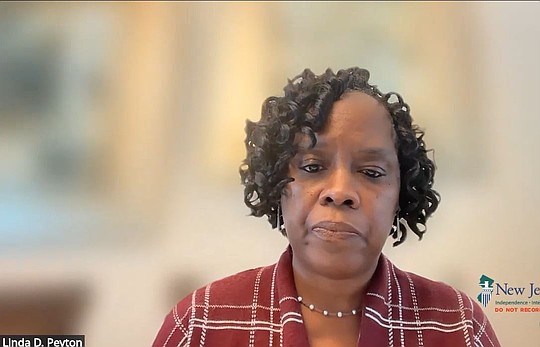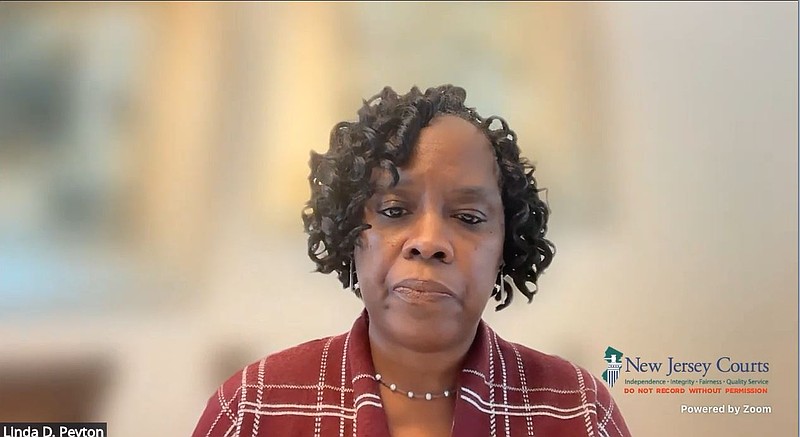
Former Pleasantville Business Administrator Linda Peyton testifies during a Chancery Division hearing in February.
Pleasantville's former business administrator must repay nearly $84,000 to the city after a judge found it never should have been paid, the state Office of the Comptroller announced this week.
Whether Linda Peyton retired or resigned from her position in 2024 was at the center of the debate, after City Council authorized the payment of $165,724 in accumulated sick leave and severance in August 2024.
But the $83,987 in unused sick time only is allowed if someone retires, not if they leave their position.
An investigation by the Office of the State Comptroller found that the money was paid illegally, since Peyton not only did not retire from the state pension system, she took a job with the state within the same system.
She fully retired last year.
The blame for the more than $80,000 misstep was placed squarely at the feet of Pleasantville, in a Nov. 7 letter sent by the then-acting state comptroller Kevin Walsh.
"OSC’s investigation also revealed there was a significant amount of confusion and misunderstanding among senior officials about whether the sick leave payment was appropriate," he wrote. "This lack of clarity appears to have been further compounded by incomplete legal guidance provided to the city."
Walsh went on to write that the city had no "written policy or procedure in place delineating which city employees and elected officials are responsible for reviewing and approving payments of accumulated sick leave, unused vacation time, and other forms of compensation to retiring employees. This lack of clarity in roles and apparent confusion about the applicable laws contributed to insufficient oversight and, here, an improper payment of over $80,000."
Peyton does get to keep the remainder of her payout — $81,737 — that is part of what the state deemed a "wasteful severance policy."
In his findings, Walsh called it "an astonishing payment equal to six months of base salary when (employees) retire or otherwise leave city employment after only five consecutive years of service."
He said this also encourages turnover of experienced employees.
The office suggested the policy be eliminated as part of a required corrective action plan.
The decision on the sick leave payments does at least recoup more than half of the taxpayer money approved by City Council in August 2024.
"If the city had knowledge that there was such a distinction, then I should have been notified before more than a year later," Peyton told the judge during February's Chancery Division hearing.
Attorney Eric Bernstein, the city's conflict solicitor, argued at the time that Peyton continued to contradict whether she retired or resigned.
"It's a retirement but it's not a retirement," Bernstein said during the February hearing. "It's a resignation but it's not a resignation. There's only one kind of retirement, your honor, and that's a full retirement from the pension system."
That did not happen in this case, the Office of the State Comptroller found, and the judge ultimately agreed in a Memorandum of Decision.
Gibson noted in the memorandum that the city “relies upon the directive from the OSC, received November 7, 2025, which deems the payment unlawful…and mandates corrective action.”
He found that “OSC’s finding, plaintiff’s internal review, and city records collectively establish a strong likelihood of success on (the city's) claim for rescission and recovery of the funds.”
In addition to its recommendations to Pleasantville, OSC urged the Legislature to consider statewide statutory remedies to curb wasteful severance and longevity policies.
To report government fraud waste, mismanagement or corruption, file a complaint or call 855-OSC-TIPS (672-8477).